Material reference
- Material
- Drywall
- Usual handling when moldy
- Remove affected sections plus a margin
- Notes
- Paper facing feeds growth; cut lines extend into dry, clean material
- Material
- Plaster on lath
- Usual handling when moldy
- Often cleaned if sound; damaged areas removed
- Notes
- Common in older homes; older plaster may need asbestos or lead testing
- Material
- Fiberglass batt insulation
- Usual handling when moldy
- Remove
- Notes
- Cannot be cleaned reliably
- Material
- Wood studs and joists
- Usual handling when moldy
- Clean, HEPA-vacuum and dry if structurally sound
- Notes
- Replace if soft, rotted or weakened
- Material
- Plywood or plank sheathing
- Usual handling when moldy
- Clean if sound; replace if delaminated
- Notes
- Common in attics and subfloors
- Material
- Particleboard and MDF cabinets
- Usual handling when moldy
- Usually remove
- Notes
- Swells and weakens when wet
- Material
- Solid wood furniture and trim
- Usual handling when moldy
- Often cleanable if finished and sound
- Notes
- Unfinished or soaked pieces may not be
- Material
- Carpet and pad
- Usual handling when moldy
- Usually remove
- Notes
- Area rugs are sometimes professionally cleanable
- Material
- Oak strip flooring
- Usual handling when moldy
- Clean surface; evaluate subfloor below
- Notes
- Cupped boards may recover after drying
- Material
- Concrete and block
- Usual handling when moldy
- Clean and dry
- Notes
- White mineral deposits indicate water passing through
- Material
- Ceramic tile and glass
- Usual handling when moldy
- Clean
- Notes
- Grout and caulk may need replacement
- Material
- Ceiling tiles
- Usual handling when moldy
- Remove
- Notes
- Porous and inexpensive to replace
- Material
- Books, papers, photos
- Usual handling when moldy
- Case by case
- Notes
- Valuable items may be candidates for specialist restoration
General practice only. A specific situation, especially sewage contamination or structural damage, can change the answer.
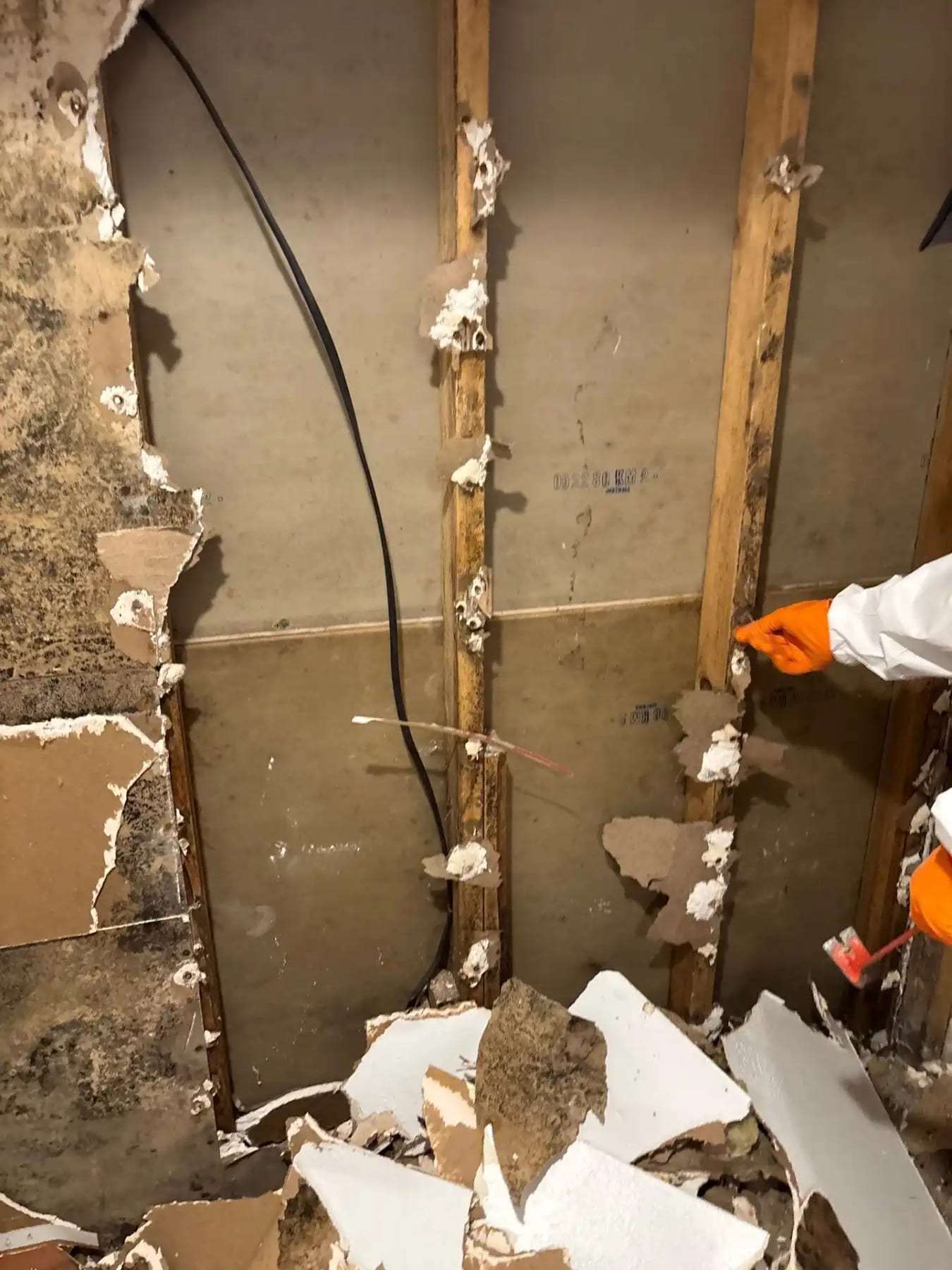
Wall with mold-stained drywall broken away from the studs. Illustrative image of the process; it does not document a job done for this site.
Porous versus nonporous: the core distinction
Porous materials
- Drywall, insulation, carpet, pad, ceiling tile, paper
- Growth penetrates into the material
- Surface cleaning leaves growth behind
- Usually removed and replaced
Nonporous and semi-porous materials
- Metal, glass, tile, sealed concrete, sound framing lumber
- Growth stays on or near the surface
- Physical cleaning and HEPA vacuuming are effective
- Usually kept once cleaned and dry
Common questions
How far beyond the visible mold is drywall usually cut?
Practice varies, but cuts generally extend some distance past visible growth and wet readings, to a convenient line in dry material. Ask the contractor what margin they use and why.
What about contents like sofas and mattresses?
Upholstered furniture and mattresses are porous. Light exposure in a room near growth may only call for cleaning, but items that were wet or show growth are usually not worth trying to save. Hard furniture can typically be wiped and HEPA-vacuumed.
Does it matter whether the water was clean or contaminated?
Yes. Materials soaked by sewage or floodwater are handled more conservatively, and some items that might survive a clean supply-line leak are discarded after contaminated water.
General information for Hilltop, not a quote or professional advice. In an emergency, call 911.