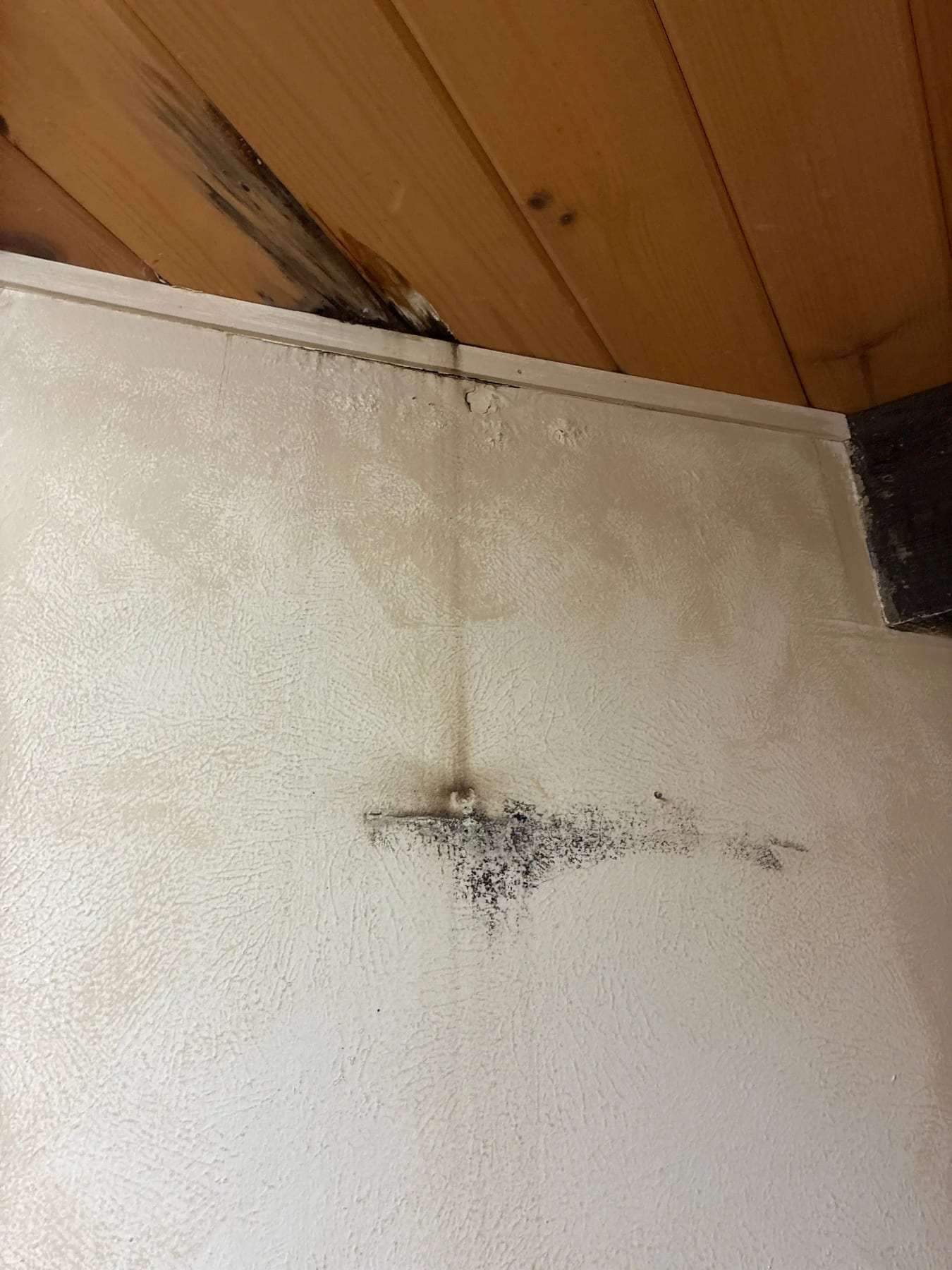
Dark staining at the corner where a wall meets a wood ceiling. A general example of this kind of work, not a photo of a particular home, business or job.
Cold surfaces and still air
Warm air holds more moisture than cold air. When indoor air touches a surface colder than its dew point, water condenses there, the same way a cold glass sweats in summer. In winter, the inside face of an exterior wall is the coldest surface in many rooms, and the coldest spots of all are corners, the junction with the ceiling, and places where insulation is thin or missing.
A closet makes it worse. The door is often closed, clothes and boxes press against the wall, and almost no warm room air circulates. The wall surface stays cold and slightly damp for weeks. Older Hilltop brick homes may have little or no insulation in exterior walls, and in attic edges above the top plate, insulation is often thin. Newer homes can have the same issue where insulation was compressed or a corner was framed solid.
Indoor humidity is the other half. Denver winters are dry outdoors, but a household that runs a humidifier, dries laundry inside, or has many occupants in a tight house can push indoor humidity high enough to reach the dew point on those cold surfaces.
Matching the fix to the cause
- IfSpotting is light and limited to the paint surface on a firm wallClean the area with a detergent solution while wearing gloves and a mask, dry it, and change the conditions that caused it.
- IfIndoor humidity reads high on a hygrometer in winterLower humidifier settings, run bath and kitchen fans more, and check that any ventilation system is operating.
- IfThe same corner returns every winterHave the attic edge and wall insulation checked; an energy auditor or insulation contractor can often find the gap with thermal imaging.
- IfDrywall is soft, stained through or growth covers a large areaIt is no longer a surface problem. Plan for removal of affected drywall with containment.
- IfGrowth appears on stored clothes, shoes or leatherLaunder washable items; porous items with heavy growth are often not worth saving.
Simple changes that help
- Leave closet doors on exterior walls cracked open during the coldest months
- Keep boxes and garments a few inches away from the outside wall
- Move dressers and beds slightly off exterior walls to let air circulate
- Use wire shelving rather than solid shelves against the cold wall
- Watch window condensation as a signal that humidity is too high
- Recheck the corner after the next cold snap
Common questions
Will painting over it with mold-resistant paint fix it?
Not if the wall stays cold and damp. Paint can slow surface growth, but the conditions must change first.
Is this a problem in summer too?
Usually much less so in Denver, though basement closets can develop similar spotting during humid summer stretches.
General information for Hilltop, not a quote or professional advice. In an emergency, call 911.