Walk-through checklist
Do this walk-through with the remediation contractor before containment comes down if possible.
- The moisture source has been repaired, and you have the repair invoice or report
- All drywall, insulation and other porous materials listed in the scope have been removed
- Framing, sheathing and concrete in the work area look clean, with no visible growth or dust
- Any remaining staining on wood has been explained, and the wood is sound when probed
- Moisture readings on framing are at normal levels for the house, and you have them in writing
- Containment barriers are still intact, without tears, until clearance is complete
- HVAC openings in the area are still sealed and the filter will be changed after the job
- Verification is complete, whether visual, independent testing, or both, and you have the results
- Photos show every opened cavity before rebuild
Where this fits in the job
- Removal complete
- Contaminated materials are out and bagged; surfaces are HEPA-vacuumed and cleaned.
- Drying period
- Dehumidifiers run until readings stabilize; the time depends on the materials and conditions.
- Verification
- Visual inspection and any agreed testing confirm the area is clean and dry.
- Sign-off
- You review the checklist, photos and readings, and confirm in writing that rebuild can begin.
- Containment removed
- Barriers come down only after verification, so a failed result does not spread dust.
- Rebuild
- Insulation, drywall, finishes and flooring go back, ideally with improvements that reduce future risk.
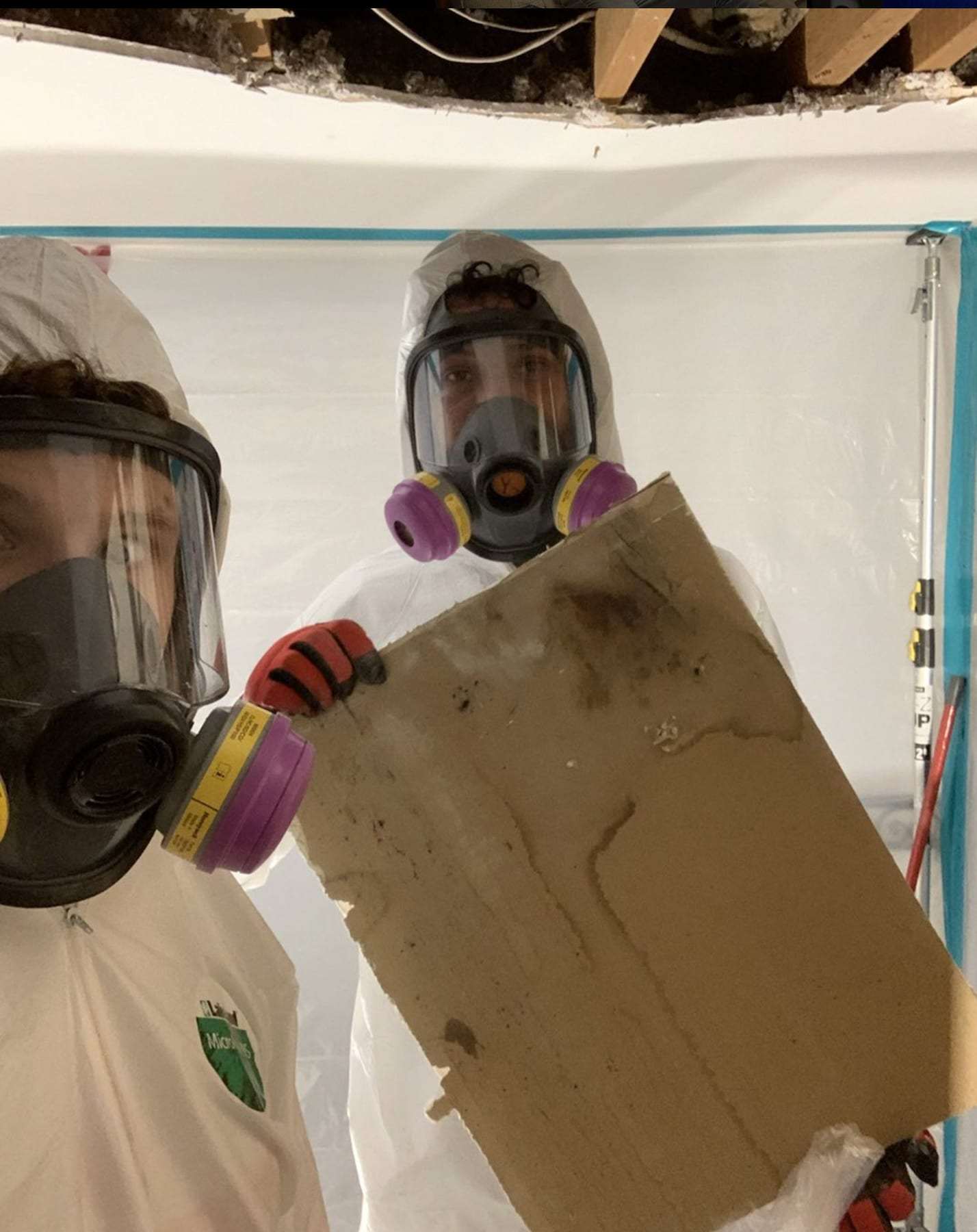
Two technicians in respirators removing a piece of moldy drywall. A general example of this kind of work, not a photo of a particular home, business or job.
Questions for the moment of sign-off
- What moisture readings did you take, where, and what are normal readings for this house?
- Is there anything you left in place that you would want me to know about later?
- If the clearance result had come back poor, what would you have done next?
- What should the rebuild include to reduce the chance of a repeat, such as a different wall assembly in the basement?
- Can I have all photos, readings and reports in one package for my records?
Common questions
How long should framing dry before new drywall goes up?
There is no single number. Drying time depends on how wet the wood was, the weather, and the equipment used. The useful target is moisture readings that match unaffected framing elsewhere in the same house, recorded on more than one day.
Should new insulation and drywall be different from what came out?
Often it is worth upgrading. In basements, many owners choose foam board against the concrete, moisture-resistant drywall kept slightly off the slab, and trim that can be removed for inspection. Ask the rebuild contractor what fits your wall.
What if I find more growth after containment comes down?
Stop, close off the area, and contact the remediation contractor with photos. It may be an untreated spot outside the original scope or a sign the source is not fully fixed.
General information for Hilltop, not a quote or professional advice. In an emergency, call 911.