The short version
- Typical entry point
- The sill and lower corners of a basement window
- Typical cause
- A window well full of leaves, soil or snow that holds water against the window
- Where mold shows
- Drywall and carpet directly below the window, often in a strip
- First fix
- Clean and drain the well, then repair the window or glass block
- When to call for help
- Growth bigger than a small patch, or drywall that stays wet
Why basement windows leak
Many original Hilltop basements have small steel or wood hopper windows set in shallow galvanized or concrete window wells. Some were later replaced with glass block, which is secure and lets in light but depends on mortar joints and a sound perimeter seal. Remodels in later decades also cut larger egress windows into foundations so basement rooms could be used as bedrooms.
A window well is meant to drain through gravel at its bottom. Over decades, wells fill with soil, leaves from mature trees and debris, so water ponds instead of draining. Snow drifts into uncovered wells and melts against the glass. When the water level rises above the sill, it finds the weakest point: a rusted steel frame, a rotted wood buck, a cracked mortar joint or a gap at the foundation cutout.
Inside, the water usually runs down the wall cavity under the window. If the wall is finished, the drywall wicks it upward, the carpet pad soaks it up, and a musty strip develops directly below the window even when everything above looks fine.
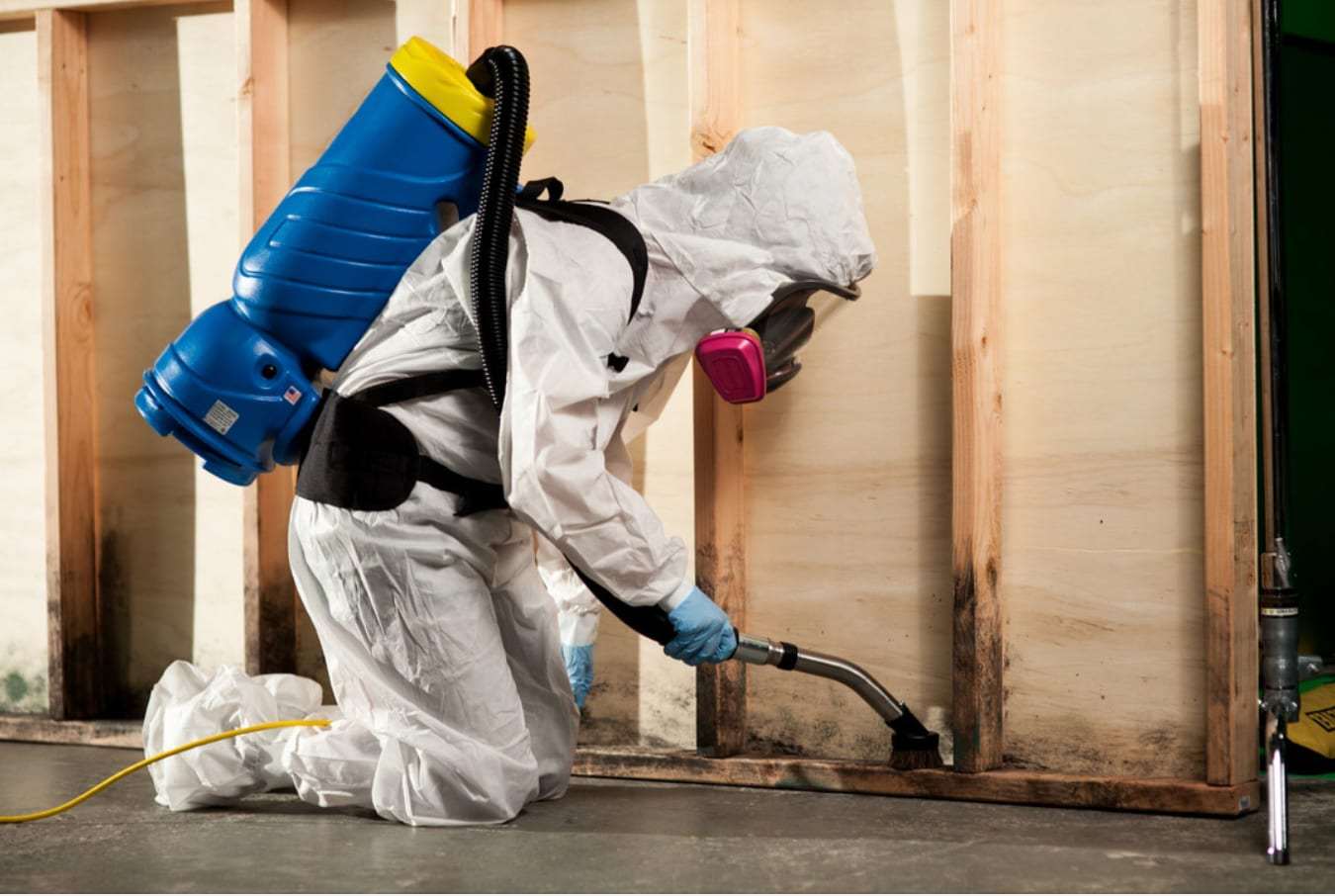
Technician in protective gear HEPA-vacuuming mold from stripped wall framing. Illustrative only: this photo is not from a job tied to this site or a specific address.
Fixing the window and the mold in the right order
Clear and check the well
Remove debris down to the gravel. Pour a bucket of water in and see whether it drains in a reasonable time. Standing water means the drain or gravel bed needs attention.
Cover or redirect
A clear well cover keeps out snow and leaves while letting light in. Make sure any nearby downspout does not empty into or near the well.
Repair the opening
Rotted wood, rusted frames and cracked glass block need repair or replacement. Egress windows have size and code requirements; ask Denver about permits before replacing one.
Open and assess the wall below
With the leak stopped, remove baseboard and inspect the drywall bottom and pad. Map the wet area with a moisture meter before cutting.
Remove, clean, dry, rebuild
Cut out affected drywall beyond the stain, discard wet pad, clean framing, and dry fully before closing up.
Twice-a-year window well check
- Leaves and soil cleared to the gravel layer
- Covers intact and fastened
- Soil outside the well sloped away from the house
- Glass block mortar free of cracks and gaps
- Interior sill dry with no peeling paint or swelling
- No musty odor in the room below
General information for Hilltop, not a quote or professional advice. In an emergency, call 911.